Answering the most common buyer questions, this guide highlights top 5 car battery chargers and maintainers designed to keep 12V batteries healthy in cars, boats, RVs, and more. Ideal buyers: everyday drivers needing reliable maintainers; hobbyists seeking jump-start-ready power; and owners of seasonal or deep-cycle batteries who want safe, automatic charging. The table below compares the selected models at a glance.
| Product | Brand | Top Feature | Best For |
|---|---|---|---|
| NOCO GENIUS1 | NOCO | Smart, compact 1A maintainer with desulfator | Small setups, trickle maintenance |
| CRAFTSMAN 12A Charger | CRAFTSMAN | 4-in-1: charge, maintain, test, recondition | Versatile automotive and marine use |
| TowerTop 2/10/25 Amp | TowerTop | 4 adjustable currents; auto desulfator | Mid-to-large 12V batteries; bulk charging |
| YONHAN 20A 12V/24V | YONHAN | 7-stage fast charger; winter mode; repair | Lead-acid and LiFePO4; seasonal care |
| PCHH 12V/24V Heavy Duty | PCHH | Auto-detects 12V/24V; dead-battery repair | Heavy-duty, across vehicles |
NOCO GENIUS1: 1A Smart Battery Charger
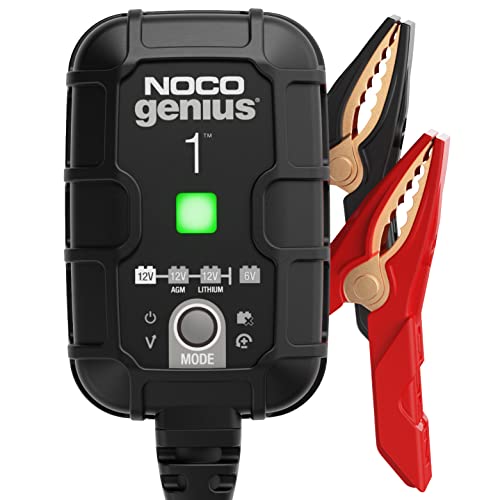
Best for: owners who want a compact, intelligent maintainer that handles both lead-acid and lithium batteries with temperature-compensated charging. The GENIUS1 combines charger, maintainer, trickle charger, and desulfator in a small package. It supports 6V and 12V systems and adapts to ambient temperature for safe charging. A clear advantage is its precision and automatic protection against overcharge and overheating.
Why selected: It provides a precise, safe, and flexible charging profile in a tiny form factor, making it ideal for vehicles with limited space or multiple battery types. Suitable for seasonal vehicles and small RVs or boats needing regular maintenance without attention.
Caution: Not a jump starter; it must be plugged in to function. Best used as a maintenance charger rather than a high-current revival tool.
CRAFTSMAN 12A Car Battery Charger and Maintainer

Best for: auto, marine, and power-sport users seeking a four-in-one device. This charger can deliver 12V fast charging, 12V maintaining, and 6V charging modes, along with a smart trickle option to safeguard batteries over time.
Why selected: The 4-in-1 capability simplifies battery care by combining charging, maintenance, testing, and reconditioning in one unit. It provides practical versatility for garages with mixed battery types and seasonal equipment.
Caution: For best results, follow the user guide to switch modes depending on battery type and state; improper use could slow maintenance cycles on specialty batteries.
TowerTop 2/10/25 Amp 12V Smart Charger

Best for: users with larger 12V batteries or those who need faster charging on 100Ah-plus packs. The TowerTop model provides adjustable currents (2A, 10A, 25A, AUTO) and an automatic desulfation/repair function for longevity. It also maintains storage voltage for long-term care.
Why selected: Its higher current options enable quicker replenishment of drained batteries, while the auto-detect and memory of last settings improve convenience after outages. Suitable for trucks, boats, or deep-cycle applications.
Caution: Higher current settings require careful connection and adequate ventilation; avoid charging extremely small or delicate batteries at 25A unless rated for it.
YONHAN 20A 12V/24V Battery Charger

Best for: drivers seeking a fast, multi-volt charger with repair mode and winter protection. It supports 12V/24V lead-acid batteries and LiFePO4, including AGM, GEL, EFB, and deep-cycle types. The device includes a smart control system and multiple protections.
Why selected: The 7-stage charging, winter mode, and high-efficiency repair mode help revive aging batteries and protect against cold-weather battery drain. It’s well-suited for vehicles stored for extended periods or used year-round.
Caution: It cannot jump-start a dead battery on its own; use in combination with a jump starter if needed for emergencies.
PCHH 12V/24V Heavy Duty Battery Maintainer

Best for: operators needing robust performance across automotive, truck, boat, and lawn equipment batteries. The unit detects 12V and 24V automatically and supports charging, maintenance, and dead-battery repair.
Why selected: Its heavy-duty build, broad compatibility with lead-acid types, and automatic detection make it a practical workhorse for workshops or garage setups with varied battery inventories.
Caution: The charger is heavier (about 12.2 lb) and less portable; ensure a sturdy mounting or shelf space for regular use.
Buying Guide: Key Purchase Considerations
- Battery type compatibility: Ensure the charger supports AGM, GEL, flooded/wet, EFB, calcium, deep-cycle, and LiFePO4 if needed.
- Voltage range: Most 12V systems are standard; look for 12V and 24V auto-detection if you have mixed fleets.
- Charging current: Higher currents (e.g., 25A) charge faster but can be rough on small batteries. Choose a model with multiple current settings for versatility.
- Maintenance and desulfation: If preserving old or idle batteries is important, prefer units with repair/desulfation modes and pulse technology.
- Protection features: Overcharge protection, reverse polarity protection, temperature compensation, and short-circuit protection are essential for safe charging.
- Winter and seasonal use: Winter mode or smart control helps prevent battery drain in cold climates.
- Portability vs. durability: Lightweight units suit small cars; heavier, rugged models suit trucks and marine gear.
FAQ
- What is the difference between a charger and a maintainer?
Chargers actively revive and fill a discharged battery, while maintainers keep a fully charged battery at a safe float level over time. - Can these chargers jump-start a dead battery?
Most listed models are not jump starters. Use a dedicated jump starter for dead batteries, then maintain with a charger. - Are LiFePO4 batteries supported?
Some models, like NOCO GENIUS1 and select YONHAN units, offer LiFePO4 compatibility in addition to lead-acid types. - How do I choose the right current?
For small cars, 2A–10A is usually sufficient for maintenance; for larger or deeply discharged batteries, 20A–25A speeds up charging but requires larger batteries to safely absorb current. - Is temperature compensation important?
Yes. Temperature compensation prevents overcharging in heat and undercharging in cold, preserving battery life. - What maintenance mode should I use?
Use pulse or repair modes when batteries show symptoms of sulfation or lack of charge retention.