Truck owners who tow gooseneck trailers know that a dependable goose neck hitch adapter can simplify connections, improve stability, and expand towing versatility. This guide highlights five leading adapters designed to convert 5th wheel setups to gooseneck configurations, with varying capacities, installation styles, and compatibility. Read on to compare features, installation ease, and performance considerations to help choose the best option for your towing needs.
Summary of selected products (bolded titles indicate key capabilities):
- GEN-Y Hitch Fifth Wheel to Gooseneck SnapLatch Coupler with Safety Chain and Mount Bolts — 30K towing capacity; compatible with 2 5/16″ gooseneck ball.
- Shocker Quick Air 5th Wheel to Gooseneck Air Hitch & Shift Lock Conversion Kit — 24,000 lbs GTW; fits Lippert 1621 and RhinoBox.
- 25,000 lbs Gooseneck Ball Plate for 5th Wheel Rails — 2-5/16″ ball; fits industry-standard rails; carbide black coating.
- 30K Lbs 5th Wheel to Gooseneck Ball Adapter — 2″ kingpin; includes anti-tilt and lubrication components.
- Fifth Wheel to Gooseneck Cushioned Trailer Hitch Adapter — 12″ to 16″ adjustable height; cushioned conversion.
GEN-Y Hitch Fifth Wheel to Gooseneck SnapLatch Coupler

The GEN-Y SnapLatch coupler combines a torsion-flex design with a secure latch system, delivering a robust coupling solution for converting a 5th wheel setup to a gooseneck. It includes safety chains and mounting bolts, designed to facilitate installation on compatible 2 5/16″ gooseneck ball configurations. This adapter targets heavy-duty towing with a 30,000-pound gross vehicle weight rating and a compatible tongue weight range that suits a broad range of loads. Consider its installation steps and required clearance when selecting a mounting location on your trailer bed or hitch frame.
Shocker Quick Air Gooseneck Conversion Kit

The Shocker Quick Air conversion kit provides an air-assisted hitch experience, offering a shift-lock mechanism for added alignment control. This kit is designed to work with specific gooseneck configurations (Lippert 1621, RhinoBox). It supports a substantial towing capacity and emphasizes ride stability through its air-assisted system. For owners who prioritize smoother towing with adjustable hitch behavior, this option can be attractive, though installation may require attention to compatibility with existing hitch frames and rails.
25,000 Lbs Gooseneck Ball Plate For Rails
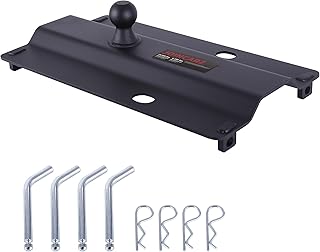
This gooseneck ball plate is engineered to fit industry-standard 5th wheel rails, delivering a high towing capacity of 25,000 pounds gross trailer weight and 6,250 pounds tongue weight. The carbide black powder coat provides durability and resistance to corrosion, making it suitable for frequent use in demanding towing applications. It is designed for quick drops into rails with four included hitch pins and can be positioned over the axle or flipped for a rearward displacement. Professional installation is recommended for best results.
Gooseneck Adapter With Anti-Tilt

This adapter is engineered to replace standard gooseneck connections with enhanced stability via anti-tilt features. The design focus is on minimizing side-to-side movement and maintaining consistent alignment under load. It fits common rail systems and includes a lubrication plate for smoother operation. It is a practical option for users seeking improved control on tall or heavy trailers, though compatibility with existing rails and tongue weights should be confirmed prior to purchase.
Cushioned Height Adjustable Fifth Wheel To Gooseneck Adapter
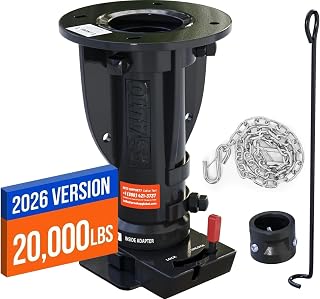
The cushioned trailer hitch adapter converts a 5th wheel into a gooseneck with a 12″ to 16″ adjustable height range. The cushioned design aims to absorb some road shock and improve overall ride quality during towing. This option prioritizes ease of use, quick conversion, and height versatility to accommodate different trailer configurations. When selecting this adapter, review clearance, cushion effectiveness, and compatibility with your truck bed setup to ensure proper fit and function.
Buying Guide: Key Considerations For Goose Neck Hitch Adapters
To choose the right goose neck hitch adapter, consider capacity, compatibility, installation, and durability. Each product can accommodate different trailer weights, rail systems, and ball sizes, so ensure your tow vehicle and trailer align with the adapter’s specifications. If you tow frequently or carry heavy loads, prioritize higher gross trailer weight (GTW) ratings and tongue weight allowances. Evaluate whether you need anti-tilt features, cushioned rides, or air-assisted mechanisms for enhanced stability. Always verify compatibility with your existing gooseneck ball, rails, and mounting points before purchasing.
- Capacity and Tongue Weight: Match GTW and tongue weight with your typical load; higher ratings support heavier equipment and livestock trailers.
- Rail and Ball Compatibility: Confirm your truck bed rail type (industry-standard rails are common) and ball size (2 5/16″ is typical); verify anti-tilt or lubrication features if needed.
- Installation and Fit: Some adapters drop into rails quickly; others require mounting bolts or professional installation. Check clearance and axle position considerations for rearward displacement options.
- Stability Features: Anti-tilt, cushioned mounts, and air-assisted systems can reduce movement and improve ride quality, especially on rough roads or long hauls.
- Durability and Coatings: Powder coats (such as carbide black) resist corrosion; assess material quality for frequent or harsh towing environments.
When evaluating options, compare how each adapter handles common towing scenarios, such as livestock or equipment trailers, heavy-duty gooseneck loads, and frequent hitching/unhitching cycles. Consider maintenance needs, such as lubrication plates and wear components, and determine whether the adapter can be installed with minimal alterations to your current hitch system. Real-world performance depends on correct selection, precise installation, and regular inspection of safety components like pins and mounting hardware.